





Fleet & Asset Tracking
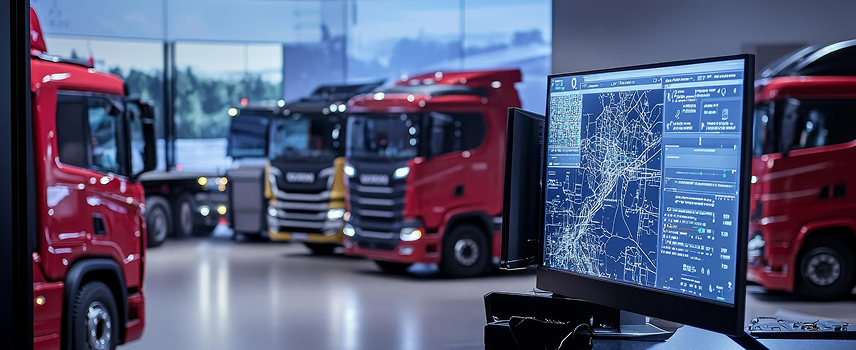
You cannot control what you cannot see. Fleet and asset tracking is about creating live visibility over where mobile resources are, how they are being used, and when movement or access falls outside expected conditions.
Arthkaira uses fleet and asset tracking to help businesses monitor vehicles, equipment, and distributed assets with clearer location visibility, alerting, and operational reporting. We often connect this work with IoT analytics, device management, predictive maintenance, and IoT security so tracking data becomes part of a wider control and decision system rather than a standalone map view.
What Is Included In Our Fleet & Asset Tracking Service
Strong tracking systems depend on more than location points. They need useful alerts, movement context, utilisation insight, and workflows that make visibility operationally practical for teams.
 Tracking strategy aligned to fleet oversight, asset recovery, utilisation visibility, and operational control goals
- Live location tracking across vehicles, equipment, containers, tools, or other mobile assets
- Geofencing and alert logic that flags unexpected movement, exits, idle states, or usage exceptions
- Utilisation, route, and activity visibility that supports better planning and resource control
- Integration planning across trackers, gateways, dashboards, cloud systems, and operational workflows
- Reporting focused on asset visibility, recovery speed, response quality, and day-to-day operational value

Visibility reduces uncertainty
Tracking works best when teams can clearly see where assets are, how they are moving, and when something falls outside expected behaviour.

Movement data supports decisions
Location and utilisation signals become more valuable when they help improve routing, deployment, control, and resource planning.

Alerts create operational response
The value of tracking is not just knowing where something is. It is knowing when to act because movement, access, or usage has changed.
Tracking Performs Best When Location Data Supports Operational Decisions
The strongest results happen when live location, alerts, utilisation insight, and connected-system reporting all support the same operational view.
 IoT Analytics & Real-time Monitoring
Turn tracking telemetry into dashboards, alerts, and operational insights that are easier to act on.
IoT Analytics & Real-time Monitoring
Turn tracking telemetry into dashboards, alerts, and operational insights that are easier to act on.
 IoT Device Management & Integration
Keep trackers, gateways, and connected endpoints coordinated reliably across the tracking environment.
IoT Device Management & Integration
Keep trackers, gateways, and connected endpoints coordinated reliably across the tracking environment.
 Predictive Maintenance Systems
Combine movement and utilisation visibility with maintenance logic for better asset reliability planning.
Predictive Maintenance Systems
Combine movement and utilisation visibility with maintenance logic for better asset reliability planning.
 IoT Security & Compliance
Protect tracking devices, connected access paths, and location data as visibility systems scale.
IoT Security & Compliance
Protect tracking devices, connected access paths, and location data as visibility systems scale.
 Industrial IoT (IIoT) Solutions
Extend asset visibility into industrial workflows, yard operations, plant movement, and equipment oversight.
Industrial IoT (IIoT) Solutions
Extend asset visibility into industrial workflows, yard operations, plant movement, and equipment oversight.
 Cloud Integration & Migration
Support scalable dashboards, remote access, and centralised tracking data handling across cloud-connected systems.
Cloud Integration & Migration
Support scalable dashboards, remote access, and centralised tracking data handling across cloud-connected systems.
How We Approach Connected Tracking Visibility
The goal is not only to know where an asset is. It is to understand movement, control access, reduce blind spots, and make it easier to respond when usage or location changes create operational risk.
That means we look at asset types, tracking frequency, alert priorities, utilisation patterns, dashboard usability, and how location signals connect to real business decisions. Good tracking is part visibility system, part alert design, and part operational coordination.
Our Fleet & Asset Tracking Process
Asset environment and visibility review
We assess the fleet or asset environment, movement patterns, recovery risks, visibility gaps, and the operational questions the tracking system needs to answer clearly.
Tracking, alert, and reporting design
Devices, dashboards, geofences, alert rules, and reporting workflows are planned so the system surfaces location and usage data in a practical operational format.
Deployment, validation, and live oversight setup
Tracking hardware, integrations, data flows, and monitoring layers are connected and refined so teams can rely on the system in day-to-day conditions.
Refinement around control and utilisation insight
The system improves over time by learning from movement patterns, response behaviour, idle visibility, loss events, and the operational decisions that matter most.
Fleet & Asset Tracking FAQ
These are common questions businesses ask when they want stronger asset visibility, better movement control, and more useful tracking insight across distributed operations.
Fleet and asset tracking services usually include live location visibility, movement monitoring, utilisation insight, alerts, geofencing, telemetry reporting, and the connected-system logic needed to improve oversight across vehicles, equipment, or mobile assets.
Fleet tracking usually focuses on vehicles and mobile operations, while asset tracking can include equipment, tools, containers, machines, or other movable resources that need location or status visibility.
Yes. Tracking can reduce loss or misuse by improving visibility over where assets are, how they are moving, when they leave approved zones, and whether they are being used in the expected way.
Yes, depending on the device setup and connectivity model. Many tracking environments support live or near-real-time visibility through GPS, cellular, gateway, or other IoT communication methods.
Logistics teams, service fleets, field operations, industrial businesses, equipment-heavy organisations, and any business that depends on mobile assets or distributed resources can benefit from better tracking visibility.
Yes. Tracking systems often include geofencing, movement alerts, unauthorised-use detection, idle visibility, and other event-based rules that make location data more operationally useful.
Tracking data becomes more valuable when it connects with analytics, maintenance planning, utilisation review, and operational monitoring so teams can act on both where assets are and how they are performing.
Success is measured through visibility quality, utilisation insight, recovery speed, response efficiency, reduced loss, stronger operational control, and whether the tracking system improves day-to-day decision-making.
