





IoT Analytics & Real-time Monitoring
Connected systems create constant streams of useful signals, but those signals only matter when teams can see them clearly and respond in time. Real-time monitoring is what turns IoT data into operational awareness instead of passive storage.
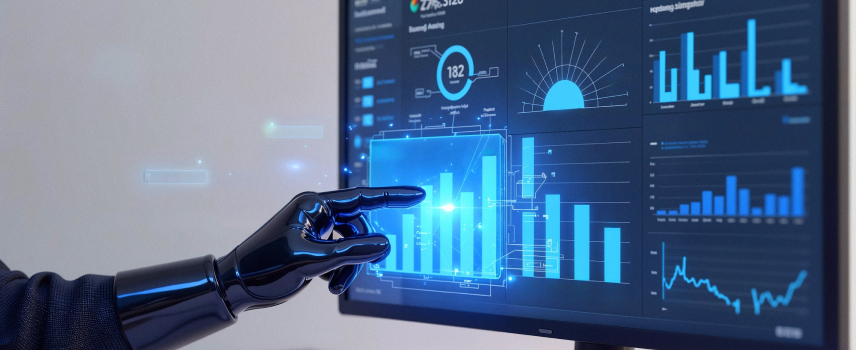
Arthkaira uses IoT analytics and real-time monitoring to build live dashboards, event visibility, alerting logic, and operational reporting around connected environments. We often connect this work with device management, IIoT, predictive maintenance, and IoT security so the monitoring layer supports real decisions rather than becoming another disconnected dashboard.
What Is Included In Our IoT Analytics & Monitoring Service
Good monitoring is about more than seeing live numbers. It requires useful alert design, telemetry context, data quality, and analytical views that help teams decide what actually needs attention.
 Monitoring strategy aligned to operational visibility, response speed, and reporting priorities
- Live dashboards and telemetry views for connected devices, sensors, and system events
- Alerting logic that highlights important exceptions without overwhelming teams with noise
- Data pipelines and analysis layers that support trends, anomalies, and performance review
- Integration planning across devices, gateways, APIs, cloud systems, and operational tools
- Reporting that focuses on actionable insight, response quality, and practical operational value

Live visibility changes response
Real-time monitoring helps teams move from delayed awareness to faster decisions based on what is happening now.

Alerts should be useful
Good monitoring is not just more notifications. It is better prioritisation of the events that actually need attention.

Analytics turns data into action
Connected telemetry becomes valuable when patterns, exceptions, and trends are easier to understand and act on.
Monitoring Performs Best When The IoT Environment Shares One Operational View
The strongest monitoring outcomes happen when device data, alerts, asset behaviour, and operational decisions are connected instead of spread across disconnected tools.
 IoT Device Management & Integration
Strengthen device visibility, fleet health, and connected-system reliability behind your dashboards and alerts.
IoT Device Management & Integration
Strengthen device visibility, fleet health, and connected-system reliability behind your dashboards and alerts.
 Industrial IoT (IIoT) Solutions
Support factories, plants, and operational environments with live industrial data and production visibility.
Industrial IoT (IIoT) Solutions
Support factories, plants, and operational environments with live industrial data and production visibility.
 Predictive Maintenance Systems
Use live condition data and trend shifts to support earlier maintenance intervention and better uptime decisions.
Predictive Maintenance Systems
Use live condition data and trend shifts to support earlier maintenance intervention and better uptime decisions.
 IoT Security & Compliance
Protect monitoring layers, connected assets, and operational data while visibility systems scale.
IoT Security & Compliance
Protect monitoring layers, connected assets, and operational data while visibility systems scale.
 Fleet & Asset Tracking
Extend live monitoring into location, utilisation, movement, and asset-state visibility across distributed operations.
Fleet & Asset Tracking
Extend live monitoring into location, utilisation, movement, and asset-state visibility across distributed operations.
 Cloud Integration & Migration
Support centralised dashboards, remote access, and scalable analytics across cloud-connected environments.
Cloud Integration & Migration
Support centralised dashboards, remote access, and scalable analytics across cloud-connected environments.
How We Approach Live IoT Visibility
The goal is not to show every datapoint all the time. It is to surface the right telemetry, the right exceptions, and the right trends so teams can understand what is changing and act with more confidence.
That means we look at device behaviour, operational thresholds, monitoring priorities, dashboard usability, alert fatigue risk, and how analytical context supports faster decisions. Good IoT analytics is part data engineering, part monitoring design, and part operational intelligence.
Our IoT Analytics Process
Visibility review and monitoring priorities
We assess the current IoT environment, the events that matter most, the blind spots in current reporting, and what teams need to see live in order to respond effectively.
Dashboard, alert, and data-flow design
Telemetry, dashboards, thresholds, escalation logic, and reporting layers are planned so monitoring stays useful instead of becoming noisy or fragmented.
Deployment, validation, and operational rollout
The monitoring system is connected, tested, and refined so live data, alerts, and visibility tools behave properly in real operating conditions.
Refinement around insight and response quality
The system improves over time by learning which alerts matter, which dashboards create better decisions, and where extra analytical context strengthens operational response.
IoT Analytics FAQ
These are common questions businesses ask when they want stronger telemetry visibility, better alerts, and more useful real-time operational insight.
IoT analytics and real-time monitoring services usually include live dashboards, telemetry visibility, alerts, event tracking, trend reporting, data analysis, and the integration logic needed to turn connected signals into usable operational insight.
Real-time monitoring helps teams detect issues earlier, respond faster, reduce blind spots, and make decisions using live operational data instead of delayed manual checks or after-the-fact reports.
Yes. Analytics can help reduce downtime by making abnormal behaviour, condition changes, and operational exceptions easier to see before they create bigger disruptions or maintenance events.
That depends on the environment, but common real-time monitoring signals include temperature, vibration, energy use, device status, occupancy, throughput, location, alerts, sensor conditions, and operational exceptions.
Yes. In many cases existing IoT environments can be extended with better dashboards, alerts, reporting layers, and analytical views without replacing the entire underlying device ecosystem.
Monitoring and analytics provide the visibility foundation that predictive maintenance relies on by surfacing condition patterns, trend shifts, and early warnings from connected assets or equipment.
Good monitoring uses threshold logic, event prioritisation, escalation rules, and contextual filtering so teams focus on meaningful issues instead of being overwhelmed by low-value alerts.
Success is measured through visibility quality, response speed, alert usefulness, downtime reduction, insight accuracy, operational confidence, and whether teams can act faster and more effectively from the monitoring system.
