





Industrial IoT (IIoT) Solutions
Industrial systems generate valuable signals all the time, but without the right connectivity and visibility those signals rarely become useful decisions. IIoT is about turning operations into something you can monitor, understand, and improve continuously.
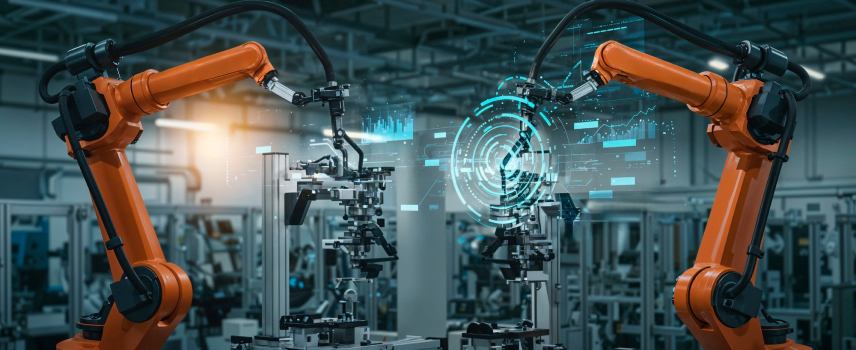
Arthkaira uses Industrial IoT solutions to connect machines, sensors, processes, and operational data into more visible and controllable industrial environments. We often connect IIoT with predictive maintenance, real-time monitoring, device integration, and IoT security so connected operations create practical business value rather than isolated data points.
What Is Included In Our Industrial IoT Service
Strong IIoT systems depend on more than machine connectivity. They need reliable data flow, useful dashboards, industrial context, and an operational purpose that actually improves plant performance.
 Industrial connectivity strategy aligned to production, uptime, and operational visibility goals
- Machine, gateway, and sensor integration across plant, warehouse, or industrial environments
- Real-time monitoring, alerts, and dashboards for faster operational awareness and response
- Data collection pipelines that support analytics, maintenance decisions, and process optimisation
- Architecture planning across existing equipment, retrofit layers, and digital system integration
- Reporting that focuses on performance, downtime reduction, process control, and industrial value

Operations become visible
IIoT helps teams see what machines, processes, and production lines are doing in real time instead of reacting too late.

Data supports better decisions
Connected industrial data creates a stronger basis for maintenance, throughput, downtime, and process improvement decisions.

Legacy assets can still improve
Many industrial environments can gain value from IIoT without replacing every machine, provided the integration strategy is planned properly.
IIoT Performs Best When Industrial Systems Share One Connected Logic
The strongest industrial gains happen when monitoring, integration, maintenance insight, and security all support the same operational environment instead of staying siloed.
 Predictive Maintenance Systems
Turn connected asset data into earlier warnings and more proactive maintenance decisions.
Predictive Maintenance Systems
Turn connected asset data into earlier warnings and more proactive maintenance decisions.
 IoT Analytics & Real-time Monitoring
Strengthen dashboards, alerts, and operational intelligence from industrial data streams.
IoT Analytics & Real-time Monitoring
Strengthen dashboards, alerts, and operational intelligence from industrial data streams.
 IoT Device Management & Integration
Manage industrial devices, connectivity layers, and system interoperability more reliably at scale.
IoT Device Management & Integration
Manage industrial devices, connectivity layers, and system interoperability more reliably at scale.
 IoT Security & Compliance
Protect operational technology, industrial networks, and connected equipment against security risk.
IoT Security & Compliance
Protect operational technology, industrial networks, and connected equipment against security risk.
 Connected Product Development
Extend industrial systems with custom interfaces, edge devices, or smart hardware where needed.
Connected Product Development
Extend industrial systems with custom interfaces, edge devices, or smart hardware where needed.
 Cloud Integration & Migration
Support remote visibility, centralised industrial data handling, and scalable system access.
Cloud Integration & Migration
Support remote visibility, centralised industrial data handling, and scalable system access.
How We Approach Industrial Visibility And Control
The goal is not just to collect more industrial data. It is to create clearer operational awareness, faster response, better maintenance decisions, and stronger control over what affects uptime and performance.
That means we look at machines, processes, downtime risk, communication layers, reporting needs, and how teams actually use operational information. Good IIoT work is part systems integration, part industrial analytics, and part process improvement.
Our Industrial IoT Process
Operational review and use-case mapping
We assess the plant, equipment, workflows, downtime patterns, and visibility gaps before deciding where connected monitoring or automation should begin.
Industrial architecture and connectivity planning
Sensors, gateways, protocols, dashboards, and integration layers are planned so the IIoT system fits the operational environment rather than disrupting it.
Deployment, monitoring, and data activation
Devices and data flows are connected, validated, and structured so teams can begin using live industrial signals in practical decision-making.
Optimisation around uptime and performance
The system improves over time by learning from asset behaviour, process bottlenecks, alert quality, and the operational outcomes that matter most.
Industrial IoT FAQ
These are common questions industrial teams ask before they invest in connected operations, machine visibility, and IIoT monitoring systems.
Industrial IoT solutions usually include machine connectivity, sensor integration, dashboards, alerts, production monitoring, data collection, and integration between industrial systems and digital control layers.
IoT is a broad category of connected devices, while IIoT focuses specifically on industrial environments where machine data, process control, uptime, and operational reliability are critical.
Yes. IIoT can improve efficiency by increasing visibility, reducing blind spots, supporting predictive maintenance, identifying bottlenecks, and helping teams respond faster to real production conditions.
Yes, in many cases. Existing machines and assets can often be connected using sensors, gateways, retrofit approaches, and integration layers depending on the available protocols and hardware condition.
IIoT setups can monitor metrics such as throughput, temperature, vibration, energy use, downtime, machine state, process conditions, alarms, and other operational signals depending on the environment.
Yes. IIoT is often a strong foundation for predictive maintenance because connected machine data makes it easier to spot abnormal behaviour before failure causes major disruption.
Industrial IoT security is handled through secure architecture, access control, network segmentation, device hardening, integration discipline, and operational practices designed for industrial environments.
Success is measured through uptime, response speed, process visibility, efficiency gains, maintenance improvement, data usability, and whether the system helps teams make better operational decisions over time.
